
Fetch.ai: One Prompt Unlocks Three Jobs and Five Grand Theft Auto VI Tips Today
Fetch.ai shows ASI: One using one prompt to manage calendar, messaging, and GTA VI tips via agents, while stressing verification and risks.
Club desk Updated 2026-11-26 0 replies
What Fetch.ai showed
Fetch.ai is using attention around Grand Theft Auto VI to make a larger point about AI. On November 21, 2026, the company posted a prompt for ASI: One, its assistant: “Block out my Saturday night, message the group chat that I’m offline, and give me 5 spoiler-free beginner tips.”
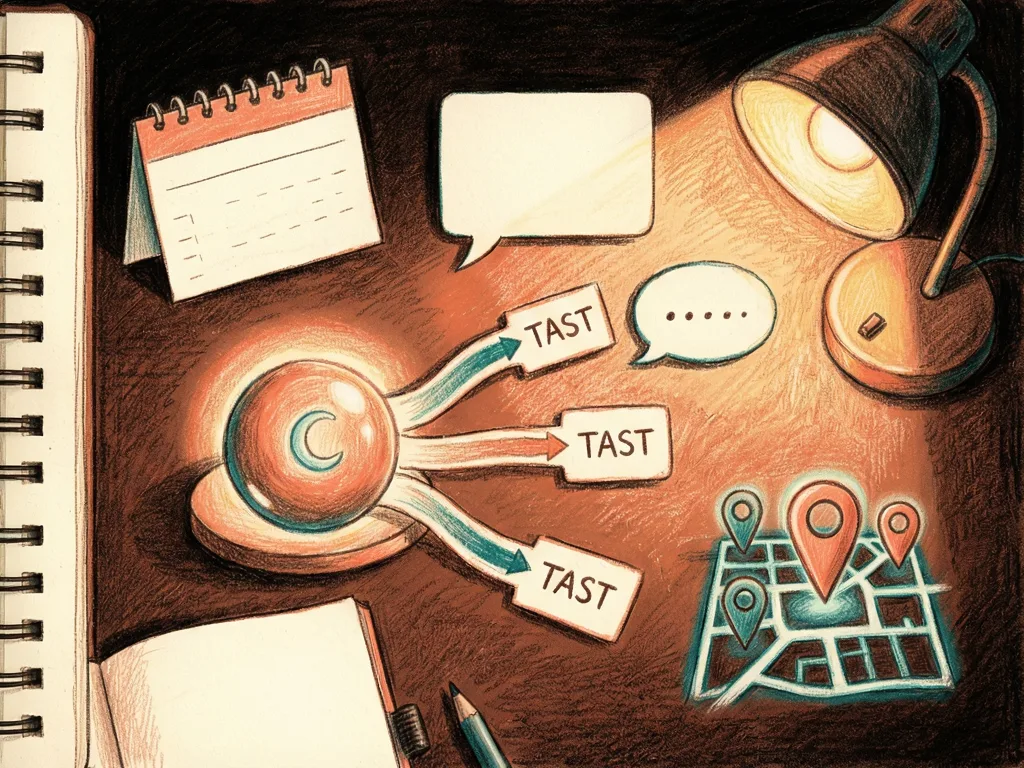
Fetch.ai said the example shows one chat doing three things: handling a calendar, sending a message, and doing research. The company also framed the idea as “connect your apps once” and “do everything from one chat.”
Why one prompt matters
A prompt is an input asked of an LLM. In a traditional assistant, each step may require a different app. Fetch.ai’s vision is different: one prompt can orchestrate connected services because ASI: One routes requests to expert agents that can perform tasks, not only generate text.
Fetch.ai’s argument is “think agents, not apps.” Users should tell software what they want, rather than click app icons. If that model spreads, the advantage may shift away from Apple, Meta, or Alphabet controlling app stores. The new challenge becomes who can discover, verify, and coordinate trusted agents.
What agents are involved
The main players in Fetch.ai’s example are:
- Fetch.ai: the company making the case.
- ASI: One: the assistant that turns a user request into actions.
- Agentverse: the ecosystem and discovery marketplace for agents.
- Model Context Protocol, or MCP: the protocol that allows agents to call external tools and real-time data.
For a newcomer, the simple idea is that ASI: One is not meant to be only a chatbot that writes answers. It is meant to find specialized agents, pass the request to them, and return a result that changes something outside the chat.
Where the risk appears
The same convenience creates new failure modes. If an agent in Agentverse can be discovered through ASI: One, someone also needs to operate it when things go wrong. Fetch.ai gives concrete examples: a calendar agent could double-book a meeting, or a messaging agent could send emails to the wrong people.
Security also matters. The material also mentions a Fetch.ai exploit that drained $2 million across two AI crypto projects. That detail is not part of the Grand Theft Auto VI example, but it explains why verification, logging, and limits on autonomous actions are important before agents affect transactions, bookings, or messages.
From chat answers to verified outcomes
Fetch.ai’s longer-term goal is for ASI: One to work as an agent discovery and orchestration layer. The company says it can do more than summarize a web page. It can discover the right agents on Agentverse, verify their identities, and order them to work directly with each other. The result can be a real outcome, such as hotel-related bookings or a chain of AI tasks.
Travel is the clearest example. A user asks for a trip. ASI: One searches, verifies, finds the right agent, and books a room. TripMate, one of Fetch.ai’s projects, uses MCP to search live hotel and flight data. The assistant can then display interactive results and links to book inside the chat. It also asks the user to state an intention, such as whether they want a ride or whether the assistant should find a booking and make a reservation.
Fetch.ai’s point is simple: if a missed flight matters more than a missed game, verification matters more. If the outcome matters more than watching the outcome, the system needs to prove that the action was done by a trusted agent.
What this means for users and developers
OpenAI, Google, and Meta also have AI assistants, so Fetch.ai is not alone in building conversational AI. Its difference is the attempt to connect agents across a marketplace and let them coordinate through MCP.
For users, the practical next phase is not a guaranteed revolution. People will need to test saved prompts, link apps, and see whether organizing feels faster than hands-on keyboarding. Fetch.ai suggests gaming is a good place to start because the risk is low. If the friction is not reduced, uptake may stall.
For developers, the shift is bigger. If users ask an assistant to “block my Saturday night” and “find tips,” the developer’s job is no longer only to build an app. It is also to provide an agent that can be found, verified, and trusted to act. If the agent fails, the developer may need to handle errors such as wrong messages or double-booked calendars.
What to watch next
The pattern could move beyond gaming into travel, planning, and everyday workflows. The key things to watch are how agents manage communications and transactions, and whether users accept that level of control. Explicit acceptability, enabling logs, and restrictions on autonomous decision making will become major factors.
Fetch.ai’s Grand Theft Auto VI prompt does not prove that agent-based computing is here to stay. It describes the idea: one prompt, one chat, multiple results. Execution and evidence will decide whether it sticks.