
Avalanche is focusing on a $100 billion fund after recording gains of 21% and 51%.
Avalanche narrows to institutional finance, productive assets, embedded payments, with New York Stock Exchange clearing and Goldman fund access.
Club desk Updated 2026-11-29 0 replies
What did Avalanche announce?
Avalanche is narrowing its scope. Ava Labs CEO Charley Cooper shared the update in "Where Avalanche is Going," saying the network cannot do everything equally well and win. Instead, Avalanche will spend its final push on three categories: institutional finance, productive assets and embedded payments.
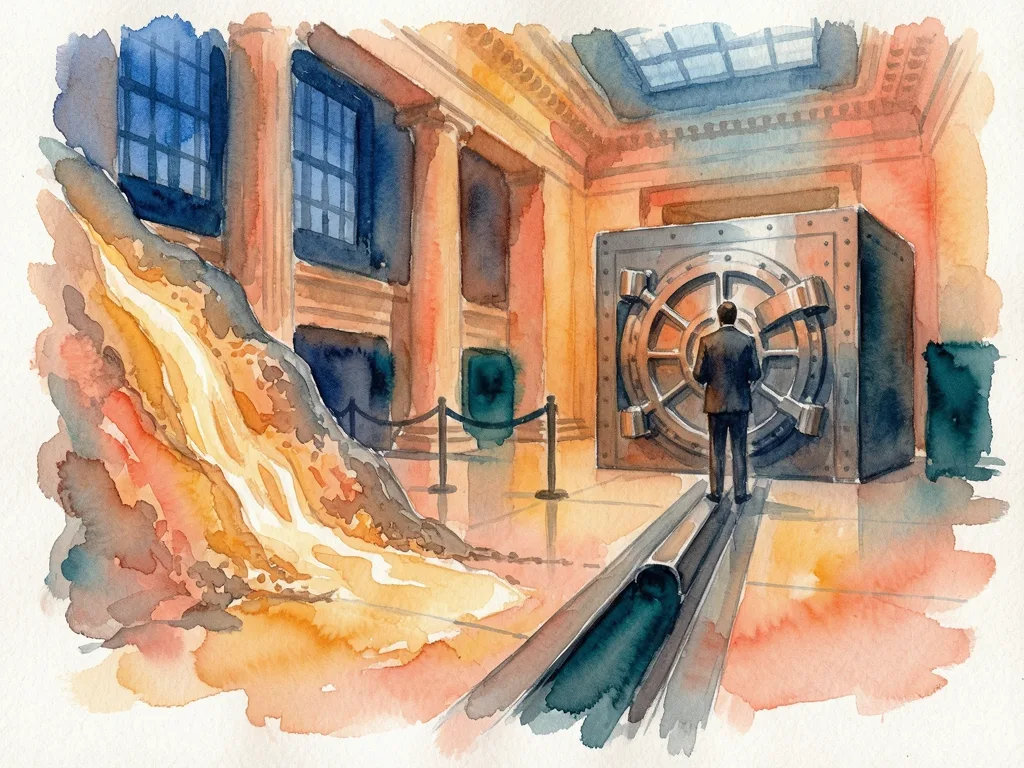
The message is simple. Avalanche is not trying to be a general-purpose blockchain that wins every market at once. It is choosing fewer, more focused areas where it can build real infrastructure and measure adoption.
In a post dated November 23, 2026, Cooper said the opportunity ahead of Avalanche is enormous and that the team intends to make the most of it.
Why does the New York Stock Exchange decision matter?
The clearest example is the New York Stock Exchange, referred to as NYSE in the source. NYSE has chosen Avalanche to be the technology underlying the clearing and settlement layer for its upcoming tokenized-securities platform. That platform is an NYSE-affiliated alternative trading system aiming for 24/7 trading once approved.
NYSE will use its Pillar matching engine, while Avalanche will serve as the clearing ledger after testing for a year. For a newcomer, the matching engine is the part that brings buyers and sellers together. The clearing ledger records how trades are settled.
This distinction matters because NYSE will settle on dedicated Avalanche infrastructure designed to meet regulatory requirements, rather than settling directly on the public C-Chain. The blockchain is not simply replacing an existing process. It is being placed under a regulated trading path.
Cooper reframes the value not as pushing an existing process onto a blockchain, but as enabling capital to flow in ways that have not been allowed before: 24/7 settlement, near-instant finality and programmable capital flow. The infrastructure stack includes exchanges, lending, collateral, stablecoins and settlement.
What comes next is described less as a series of announcements and more as infrastructure that becomes live and remains in use.
What does institutional finance mean here?
For readers new to crypto, institutional finance means market activity involving regulated firms, large funds, trading venues and established financial processes. Avalanche's focus on this category suggests it wants to be useful where money moves through formal rules, not only in open crypto experiments.
The NYSE example is the main proof point. A traditional trading venue selecting a blockchain for clearing and settlement gives the technology a role inside a market structure that already has regulatory expectations.
This is important because it shows a path away from hype and toward operational use. The question is not only whether a blockchain can issue tokens. The question is whether it can support market infrastructure that institutions can rely on.
What are productive assets?
The second category is productive assets. Cooper says that putting a tokenized asset on a blockchain is only the beginning. The value increases when people can trade the asset, borrow against it, use it as collateral, generate yield or meet a real enterprise use case.
The source gives a concrete example: Goldman Sachs' flagship Financial Square Treasury Instruments Fund FTIXX, with close to $100 billion of assets, can now be accessed through Lynq. Lynq is a private, permissioned settlement network built on a separate Avalanche Layer 1. More than 30 institutional firms use Lynq, and qualified companies can park cash in the fund between trades to earn Treasury-linked yield.
FTIXX itself is not going through the tokenization process. Users can access traditional fund shares through tZERO Securities. The blockchain link exists beneath the fund on the settlement network.
That detail is useful for newcomers. The blockchain may not be visible to the end user. Instead, it can sit under a familiar financial product and improve how settlement, records or access are handled.
What are embedded payments and everyday commerce?
The third category covers payments, loyalty and rewards embedded into products consumers already use. Cooper says the standard is operational: consumers should not need to understand blockchain concepts. They should see return customers and repeat transactions.
The source points to loyalty programs as an example. Rain purchased the Avalanche-based loyalty platform Uptop. The Cleveland Cavaliers' Cavs Rewards on that platform led to a 21% increase in spending by sponsors and a 51% increase in Team Shop sales. Piston's implemented the same approach, followed by six D1 athletics programs and the NHL Tampa Bay Lightning.
These cases suggest a different path than gambling-style activity. They require persistent volume and quantifiable results: users come back, spend more and generate measurable outcomes for businesses.
For a reader, this means the focus is not only on whether a token exists. The focus is on whether real businesses can use the system to drive repeat consumer behavior.
What other Avalanche figures did the source mention?
The source also included related figures that show broader network activity and market reaction.
One related item says Avalanche processes 23 million transactions. Another says Aave V4 deposits surpass $225 million after a 295% rise. A third says the NYSE news was followed by an 8% AVAX jump, mentions six firms and refers to a fourth-quarter launch.
These numbers are separate from the core three-category strategy, but they help explain why readers may be paying attention. They show that Avalanche is being discussed not only as a technology project, but also as an ecosystem with measurable activity and market sensitivity.
How will competition affect the plan?
Avalanche faces competition from stablecoins and payment networks, as well as other Layer 1 and Layer 2 ecosystems. Cooper says these needs will inform the guidance Avalanche gives to ecosystem builders.
For investors, the approach gives a clearer way to judge progress. The source highlights live deployments, user retention and economic activity instead of headlines alone.
This is a practical point for readers. A blockchain project can announce partnerships or technical features, but the more durable question is whether real users return, whether institutions keep using the infrastructure and whether transactions continue to happen.
What still needs to happen?
The outlook will be determined by execution. The NYSE platform still needs regulatory approval. Lynq will need to demonstrate repeat usage by stakeholders beyond early users. Embedded payments will need to show retention and proof that loyalty gains can extend beyond sports.
Cooper is betting that disciplined product management can turn technical advantage into lasting adoption.
For a newcomer, the key takeaway is that Avalanche is trying to move from broad experimentation to narrower, measurable use cases: regulated market settlement, fund-linked productive assets and consumer-facing payments and loyalty systems.
Avalanchetokenized securitiesNew York Stock Exchangeinstitutional financeproductive assets