
Why Did Marathon Digital Holdings Sell $3,000,000,000 Worth of Bitcoin in 2026?
Marathon sold 40,581 Bitcoin in 2026 for $3,000,000,000 to repay debt, free collateral, pivot from mining to AI, and retain 34,012 Bitcoin.
Club desk Updated 2026-11-20 0 replies
What Happened With the Latest Bitcoin Transfer?
On-chain tracking data shared by Lookonchain showed that MARA Holdings moved another 366 BTC, worth roughly $23.33 million, out of its wallets. The transfer happened while Bitcoin traded near the $63,700 level. Lookonchain posted the alert on November 18, 2026, about eight hours after the move, and it drew scrutiny toward MARA's broader 2026 treasury activity.
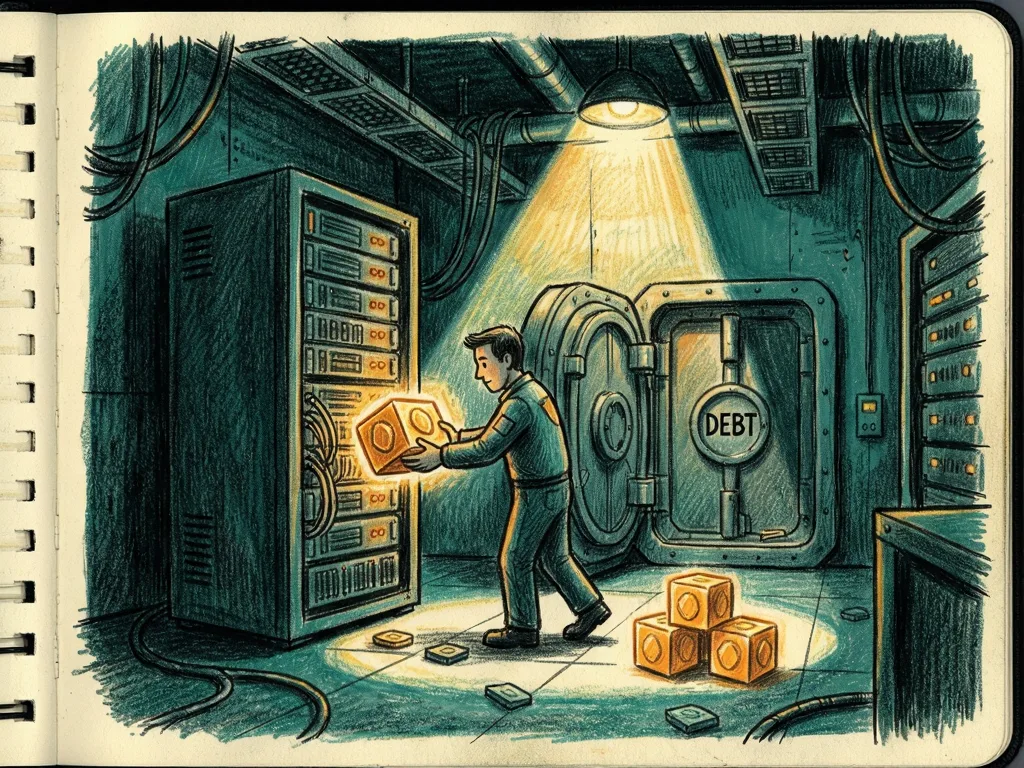
The latest sale capped a much larger selling program. According to company disclosures and on-chain tallies, MARA sold 40,581 BTC in 2026 for approximately $3.03 billion, at an average price of $74,446 per Bitcoin.
Why Did a Multi-Billion-Dollar Miner Sale Not Have to Look Bad?
At first glance, a multi-billion-dollar miner sell-off can sound like a bearish warning sign for retail investors. But MARA's third-quarter 2026 financial disclosures describe a calculated financial reset. The company said it sold near market highs to wipe out $1.4 billion in debt and unlock 17,477 BTC that had been pledged as collateral.
Collateral means assets pledged to secure a loan. When a miner borrows against Bitcoin, part of its Bitcoin reserve is locked as security. If the miner repays the loan, that locked Bitcoin can be released.
How Did MARA Use the Sale Proceeds?
In an official statement on X accompanying its third-quarter 2026 earnings release, posted on November 16, 2026, MARA confirmed that it deployed $750 million from post-quarter Bitcoin sales to fully repay its Bitcoin-backed debt.
MARA said it used bitcoin sale proceeds after quarter-end to fully repay $750 million of bitcoin-backed debt, releasing all 17,477 bitcoin pledged as collateral. The company also said its total debt had fallen by $1.4 billion, or 37%, since the beginning of 2026.
That debt reduction changed the balance sheet. Clearing the credit facilities released all 17,477 BTC previously pledged as collateral. Since the beginning of 2026, MARA's total debt load fell by $1.4 billion, a 37% cut.
Why Did MARA Change From a Hold-Everything Strategy?
For years, publicly traded Bitcoin miners followed a strict hold-everything playbook. They kept mined Bitcoin as a reserve asset and borrowed cash against those reserves to fund operations and hardware expansion. In 2026, MARA aggressively reversed that approach.
The company also highlighted its ambition to evolve from a pure-play Bitcoin miner into an integrated, energy-backed AI and digital infrastructure platform. According to MARA, Bitcoin mining built the physical footprint, access to low-cost power created the opportunity, and AI, high-performance computing, and cloud services offer higher-margin, longer-duration, and more predictable returns. The company is now shifting from building capacity to commercializing it as an integrated "energy-to-compute" operator.
How Large Is MARA's Mining and Treasury Position?
MARA's energized hashrate reached 71.2 exahashes per second in the third quarter, up 18% year-over-year from 60.4 exahashes per second. That level cemented its position as the largest publicly traded Bitcoin miner by computing capacity. Hashrate is a measure of mining computing power.
The company captures roughly 5.4% of all global Bitcoin miner rewards. During the quarter, it produced 2,247 BTC and won 644 blocks. That share was a slight dip from 5.9% in the second quarter, because overall network difficulty grew faster than MARA's deployments.
At the end of the third quarter of 2026, MARA held $3.8 billion in total liquidity. That figure consisted of 34,012 BTC, valued at about $2.8 billion, and $946.5 million in unrestricted cash.
What Does This Mean for Bitcoin Holders and ETF Demand?
MARA's Bitcoin sales could add further downward pressure on the price in the short term, particularly as demand remains weak and US spot Bitcoin ETFs recorded nearly $240 million in outflows the previous day.
However, the move could be positive from a longer-term perspective. By repaying $750 million in debt, MARA freed up 17,477 BTC previously pledged as collateral. That reduces the risk of forced liquidations if Bitcoin falls further. Forced liquidations can happen when pledged collateral is sold to satisfy loan terms.
Why Is This Important Beyond One Miner?
MARA's move reflects a broader shift across the Bitcoin mining industry. Publicly traded miners are no longer simply holding Bitcoin. They are actively managing their treasuries, reducing debt, and expanding into energy and AI infrastructure. This could make the sector more resilient during market downturns and reduce the risk of forced Bitcoin selling.
Related DailyCoin coverage also said Bitcoin held $64,000 after US bank outages, demand indicators flashed warning, and an attack on 64,000 Bitcoin miners failed to shake BTC.
BitcoinMarathon DigitalBitcoin minerdebt reductionAI infrastructure