
Bitfinex Explains How Bitcoin Treasury Firms Attract Income Investors
Bitcoin treasury firms use preferred stock to raise fixed-income capital for BTC accumulation while offering yields.
Club desk Updated 2026-11-24 0 replies
Bitcoin treasury companies are companies that hold Bitcoin as part of their corporate reserves. Bitfinex Securities says they are turning to preferred stock to reach investors whose mandates may prevent them from holding Bitcoin, spot ETFs, common equity or convertible bonds. The goal is to attract fixed-income capital through a yield instrument, while the company uses the proceeds to accumulate Bitcoin. This reflects a broader development of Bitcoin-linked digital credit instruments.
What is the preferred-stock strategy?
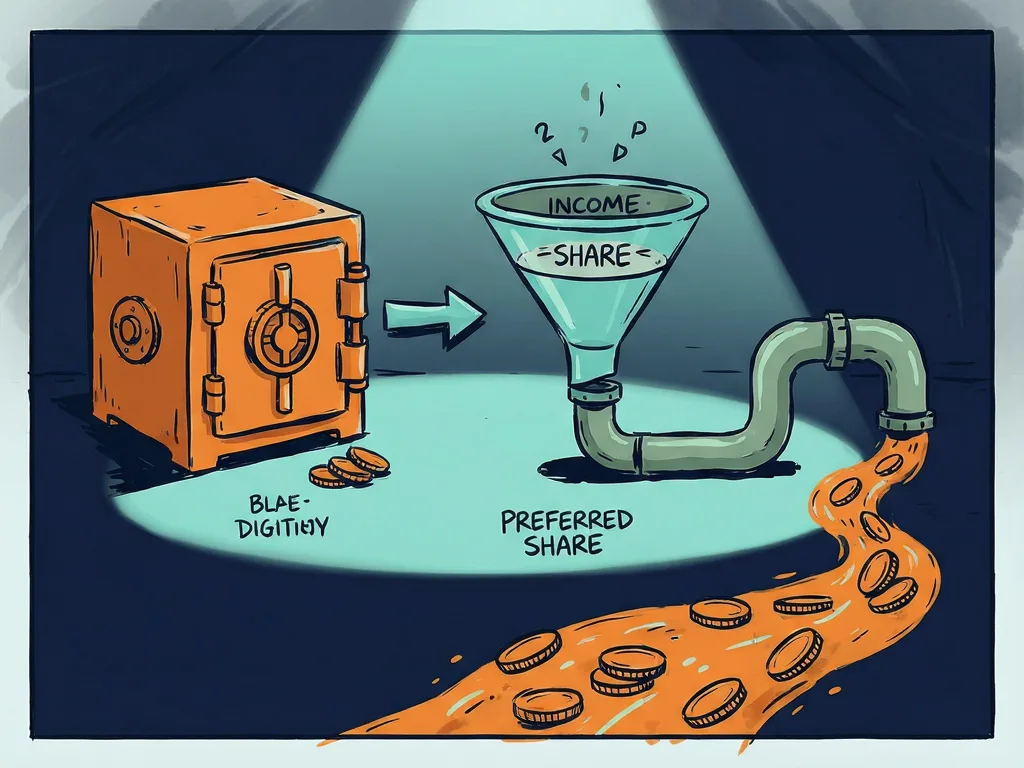
Preferred stock generally sits between debt and common equity. Holders receive dividends before common shareholders, but they usually do not share in the same upside as common shareholders when the underlying business or asset rises. For a Bitcoin treasury company, that can create a way to raise money from investors who want income rather than direct Bitcoin exposure.
Strategy’s STRC is a central example. Bitfinex Securities describes STRC as a variable-rate preferred share that currently carries a 12% variable annual dividend. The security has traded close to its $100 par value. Par value is the stated face value of a security, and market prices can move around that level.
The structure gives Bitcoin treasury companies access to fixed-income capital that traditional equity cannot reach. Instead of relying only on common-stock demand, they can offer a dividend-paying instrument and direct the proceeds toward Bitcoin accumulation.
Why do fixed-income investor mandates matter?
Many institutional buyers operate under rules that limit the assets they can hold. Bitfinex Securities highlights a gap between conventional fixed income and Bitcoin-linked preferred securities: an investor may not be permitted to buy Bitcoin, spot ETFs, common equity or convertible bonds, but may be able to buy a preferred security issued by a company that holds Bitcoin.
Richard Byworth of BYZ Partners frames the issue as a yield comparison. Investors may resist government-debt yields near 5% when technology-company debt can offer 7% to 9%, while perpetual preferred stock from treasury companies pays around 12% to 13%. Perpetual preferred stock generally has no fixed maturity date, so the buyer is exposed to the issuer’s continuing ability to pay dividends.
For many buyers, the attraction is income rather than participation in Bitcoin’s upside. That means the investor may care more about the issuer’s financing terms than about Bitcoin’s price direction.
What do Strive’s $630 million raise and SATA growth show?
Strive has used preferred equity to raise capital. It collected $630 million through a preferred-equity issuance in October. That money can be directed toward Bitcoin accumulation while the company offers investors a yield product.
Strive also expanded SATA beyond $1.4 billion. SATA’s notional value grew from $200 million to more than $1.4 billion in under a year. Strive CEO Matt Cole said buyers of SATA and SATS were hedge funds and long-only managers. These are asset-management categories with different investment mandates, but the common thread is demand for a structured income product.
The example shows that preferred stock can scale quickly when investors are willing to accept issuer-level Bitcoin exposure in exchange for yield. It also shows that the product is not a direct Bitcoin purchase; it is a claim on the issuer’s capital structure.
How did the 2026 downturn change the model?
The preferred-stock approach became more important as premiums on treasury-company common shares narrowed during the 2026 downturn. When common shares trade at high premiums, companies can raise money by selling equity at prices above underlying asset value. When those premiums shrink, preferred stock can become a more practical funding channel.
The 2026 decline also tested the model’s dependency. Bitcoin fell from above $126,000 to below $60,000, putting treasury companies under pressure and eroding equity premiums that supported fundraising.
The core dependency is simple: Bitcoin must generate returns above the dividend yield promised to investors over time. If Bitcoin underperforms the promised yield, the financing loop can reverse instead of compounding. A company may need to pay dividends even when its Bitcoin holdings are not producing enough return to cover the cost of capital.
Strategy maintained about $4.75 billion in cash reserves, while preferred securities remained part of its capital and dividend framework. Cash reserves can provide a buffer, but they do not eliminate the need for the underlying strategy to produce returns above financing costs.
How does tokenization extend access?
Tokenization adds distribution by making these securities available fractionally to eligible investors outside US markets. Bitfinex Securities listed Bitcoin treasury-company products that allow purchases in fractions of a share, lowering barriers such as minimum subscriptions.
The approach is visible in tokenized notes linked to Strategy and other treasury companies. Tokenization can expand the addressable investor base without changing the economics of the instruments. A fractional token may make the product easier to buy, but the investor still depends on the issuer’s preferred-stock or note structure.
For readers, the important point is that tokenization changes access, not necessarily risk. A smaller minimum can make an instrument feel more accessible, but it does not guarantee dividends, remove issuer credit risk, or isolate the product from Bitcoin’s price movements.
What does this mean for readers?
Bitcoin treasury companies are using preferred stock to build a bridge between fixed-income investors and Bitcoin-linked balance sheets. The model can attract capital that would not come through common equity alone, and tokenization can widen distribution beyond US markets.
But the model is not a simple substitute for holding Bitcoin. It depends on a spread: Bitcoin returns must exceed financing costs and promised income over time. If that spread works, preferred securities can support continued accumulation. If it does not, the financing loop can reverse.
For newcomers, the practical questions are: what does the security pay, who is the issuer, what risk does the preferred structure take on, and what happens if Bitcoin returns fall below the yield? Bitfinex Securities stresses that viability still depends on the relationship between Bitcoin returns, financing costs and promised income.
Preferred StockBitcoin TreasuryFixed IncomeDigital CreditDividend Yields