
Wall Street expects SpaceX to surge 64 percent even as AI stocks crash.
Jefferies sees SpaceX up 64% to $210, led by Starlink and launch growth, as AI stocks fall amid a broader tech selloff affecting crypto risk appetite.
Club desk Updated 2026-11-26 0 replies
Jefferies’ SpaceX Valuation Stands Out During an AI Selloff
What happened?
Investment bank Jefferies initiated coverage of SpaceX stock, listed as SPCX, with a Buy rating and a $210 valuation level. That level is roughly 64% above Friday’s closing price of $127.79.
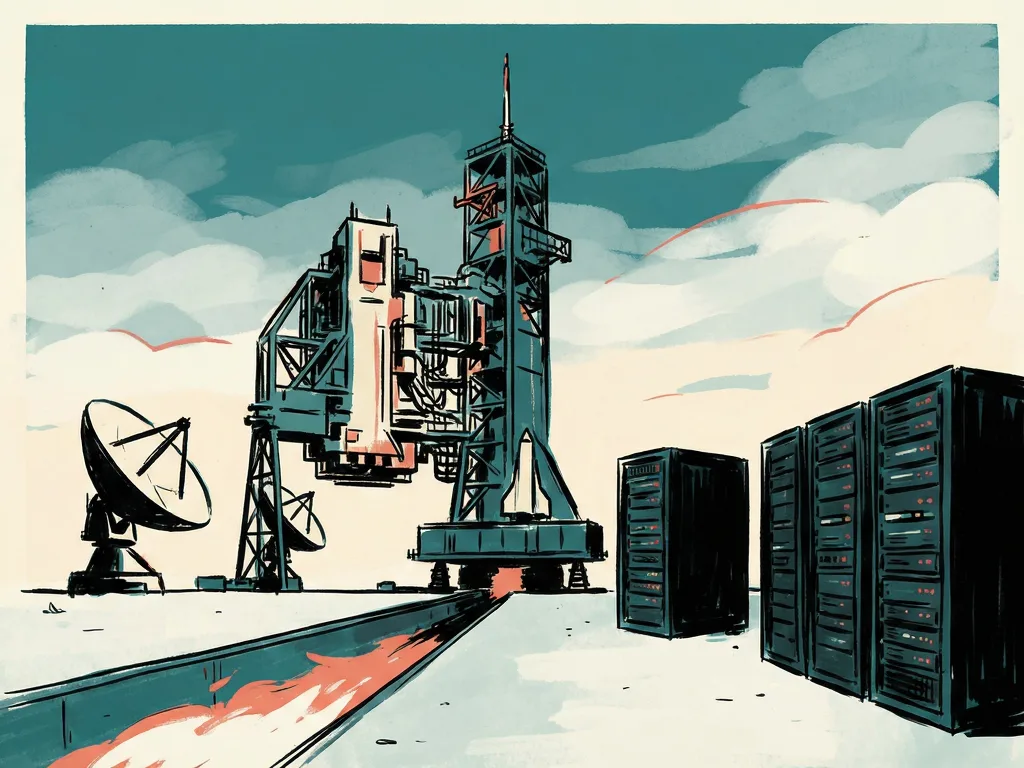
The note is unusual because it was published while many artificial intelligence and semiconductor stocks were already falling sharply. Jefferies did not describe Elon Musk’s company only as a rocket manufacturer. It framed SpaceX as a broader global infrastructure platform that connects satellite broadband, orbital launch, and AI computing capacity.
The research note was titled It’s Just Rocket Science and was written by Jefferies analyst Sheila Kahyaoglu. The central argument was that Starlink, SpaceX’s satellite internet service, is the main engine behind the company’s long-term value.
Why is this call unusual right now?
Jefferies made this move during a difficult stretch for risk assets. On Friday, the S&P 500 and the Dow Jones Industrial Average slipped more than 10% below their record highs, entering what is commonly called a correction territory. The Nasdaq fell roughly 5%, erasing its 2026 gains.
Nvidia was near the center of the selloff. Its shares plunged roughly 13% to 14% on Friday after CEO Jensen Huang’s resignation amid scrutiny over an alleged Chinese chip-smuggling link. The article also notes reports that SEC enforcement staff are reviewing potential accounting issues.
The pressure was not limited to Nvidia. Newly public Anthropic surrendered most of its first-day IPO gains during its second session. At the same time, expectations of a December Federal Reserve rate hike added further pressure on high-growth technology stocks.
For readers newer to markets, this means that Jefferies’ bullish SpaceX view was issued while several large technology and AI-linked assets were losing value quickly. That contrast is what makes the report stand out.
What is the Starlink and launch math?
Jefferies projected that Starlink could generate $92 billion in annual revenue by 2029. The firm said that would represent a 70% compound annual growth rate, with operating margins exceeding 60%, according to Investing.com.
The launch business was also given a specific forecast. Jefferies projected the core launch division could deliver $9 billion in revenue and $4 billion in earnings before interest, taxes, depreciation and amortization by 2029. That projection depends on Starship scaling toward 315 flights per year.
In plain terms, Jefferies is not just valuing SpaceX based on rocket launches. It is treating Starlink as a major internet infrastructure business and launch services as a separate revenue engine. The Starship flight number is important because more launches can support more satellite deployment, more network capacity, and potentially lower launch costs over time.
Why would a rocket company matter for AI infrastructure?
The Jefferies thesis connects SpaceX to a bigger AI story. As hyperscalers race to secure electricity, data centers, and compute capacity, the article argues that SpaceX’s orbital network and massive capital deployment position it to capture growing AI infrastructure demand.
AI systems need more than software models. They need processing power, networking, energy, and physical infrastructure. Satellite broadband can provide global connectivity, while orbital launch capacity can support new forms of computing or communications assets placed in space. This is why the note links SpaceX not only to rockets and internet, but also to AI computing capacity.
What does this mean for crypto and AI tokens?
For crypto traders, SpaceX’s stock trajectory matters on two fronts.
First, high-beta technology and AI equities continue to shape institutional risk appetite. High-beta assets usually move more sharply than the broader market. When large Nasdaq stocks fall quickly, the article notes that this can trigger short-term deleveraging across Bitcoin and AI-linked tokens. Deleveraging means investors may reduce borrowed positions, which can add selling pressure in related markets.
Second, Jefferies’ thesis reinforces one of crypto’s stronger narratives: compute and bandwidth scarcity. The article says this bottleneck is driving capital toward both orbital infrastructure and decentralized physical infrastructure networks. For newcomers, that means limited access to processing power and internet capacity can make alternative infrastructure models more attractive, including satellite networks and blockchain-enabled physical network projects.
This does not mean SpaceX and crypto move together in a simple way. It means the same underlying themes—AI infrastructure, scarce compute, bandwidth, and risk appetite in technology markets—can affect how investors view both equities and crypto-linked assets.