
US Files Forfeiture Case Against North Korean Hackers Over $1.1 Billion in USD Coin Taken From Binance
US seeks permanent forfeiture of $1.1 billion USD Coin stolen from Binance by North Korean hackers; Circle may issue new tokens after a court order.
Club desk Updated 2026-11-28 0 replies
What did the US Justice Department file?
The US Justice Department filed a civil forfeiture action on November 23 seeking permanent ownership of more than $1.1 billion in USDC, the dollar stablecoin issued by Circle. The department says North Korean hackers stole the tokens from Binance around October 29 and then laundered them.
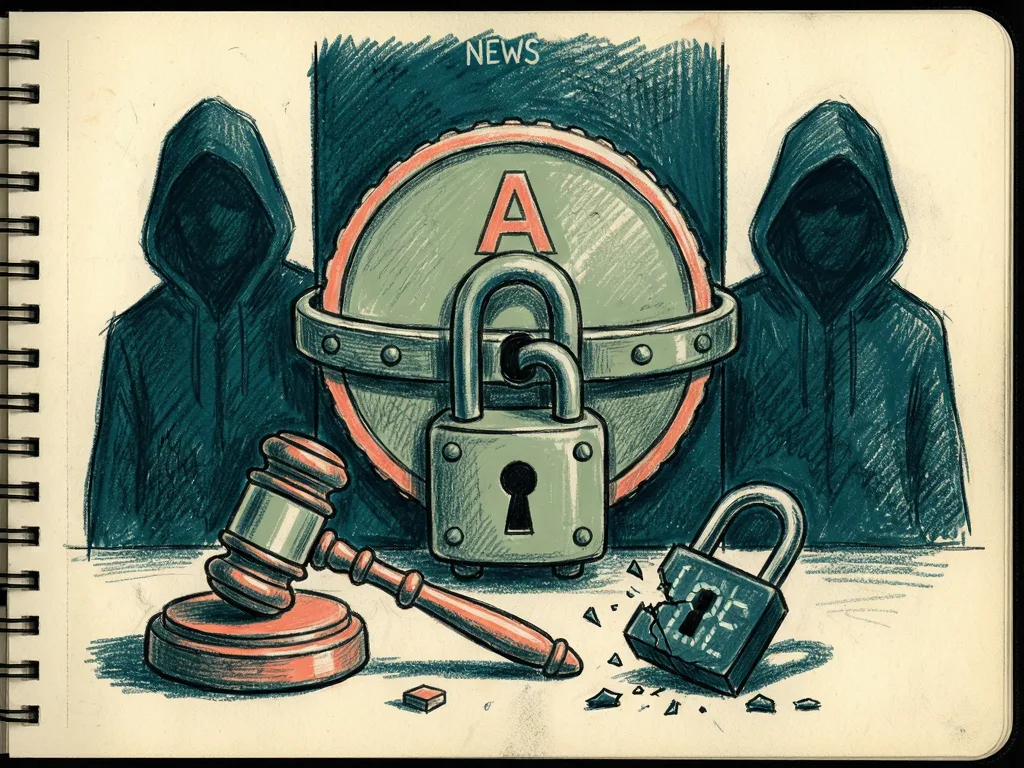
A civil forfeiture case asks a court to decide that property should permanently go to the government. In this case, the government wants the USDC itself to be transferred to the US.
Why does the frozen USDC matter?
The report says the tokens were not moving anywhere. Earlier this month, a court cleared prosecutors to seize or freeze over $1.2 billion linked to the theft, and the department said the USDC in the new case was already under that government-requested restraining order. The new complaint asks a court to hand the funds to the US for good.
How did The Block describe the complaint?
The Block, which said it reviewed the complaint, put the balances it lists at about $1.17 billion spread over 36 addresses on 18 blockchains. The filing names the attackers as the Lazarus Group, also identified as Advanced Persistent Threat 38, The Block reported. Unchained has not seen the complaint.
How could Circle deliver forfeited USDC if the original tokens are frozen?
Circle cannot move the frozen originals, so the complaint sets out a workaround. According to the complaint as quoted by The Block, Circle “has agreed to voluntarily issue new USDC in an amount equivalent to the amount of the Defendant Property” and transfer it to the government “upon receipt of an Order of Forfeiture from the Court.”
In plain terms, if the court grants the forfeiture, the government could receive newly issued USDC matching the frozen amount, rather than requiring Circle to move the blocked original tokens.
Why did prosecutors seek a new restraining order?
Prosecutors also asked for a new restraining order so the freeze cannot lapse, The Block reported. The Block reported that prosecutors could not tell if or when the November 12 order would run out.
That request matters because a temporary freeze can expire unless a court keeps it in place or replaces it. The new restraining order would help preserve the frozen assets while the forfeiture case continues.
How does this fit into a broader recovery effort?
The department said the case is one piece of a broader push to help Binance recover more than $6 billion in stolen assets. It also said the US has played a part in locking down or recovering more than $2.9 billion in crypto since the hack. Circle “provided valuable assistance,” the department said in its release.
Why did Circle and Tether freeze funds so quickly?
Issuers had business reasons to act quickly. Jonty, the founder of Pangolin Intelligence who goes by tanuki42, said on Unchained in early November that the hack “affects everybody’s bottom line,” which he said explained the fast freezes by companies like Circle and Tether. “There is huge, huge incentive for these companies to step in and freeze the funds,” he said.
For readers, this explains why a theft on one exchange can produce rapid action by token issuers: the ability to freeze or cooperate with authorities can affect trust in the broader crypto market.
What did the Secret Service say about the response?
Todd Bratz, a special agent in charge at the US Secret Service, said, “Secret Service investigators worked with precision to identify and freeze stolen funds within minutes of the hack.”
The investigation is not limited to one agency. Investigators from the Federal Bureau of Investigation, the Secret Service and Internal Revenue Service Criminal Investigation are handling the probe.
What is Binance doing outside the US case?
Binance is also pursuing the money abroad. An Abu Dhabi court order obtained by the exchange in November named Circle among 18 companies required to keep frozen tokens locked.
What does this mean for users?
The case shows three practical points:
- A court can order temporary freezes, then move to permanent forfeiture if prosecutors prove the case.
- Stablecoin issuers may cooperate by issuing replacement tokens when original tokens are blocked.
- Recovery can involve both US law enforcement and foreign court orders, with exchanges and token issuers asked to keep assets locked.