
Aster has burned another $1,820,000 worth of its native token as the token price anticipates a breakout.
Aster burned $1,820,000 in ASTER via fee-linked buybacks. Price tests $0.49-$0.50 support; double bottom needs $0.70 breakout.
Club desk Updated 2026-11-25 0 replies
Aster has continued its token buyback-and-burn strategy, linking platform revenue to ongoing supply reduction and its long-term tokenomics approach. Meanwhile, ASTER faced selling pressure as buyers attempted to defend a key support zone. Crypto With Gopal identified a potential double bottom formation that could signal a bullish trend reversal if buyers regain momentum and overcome neckline resistance.
What Happened?
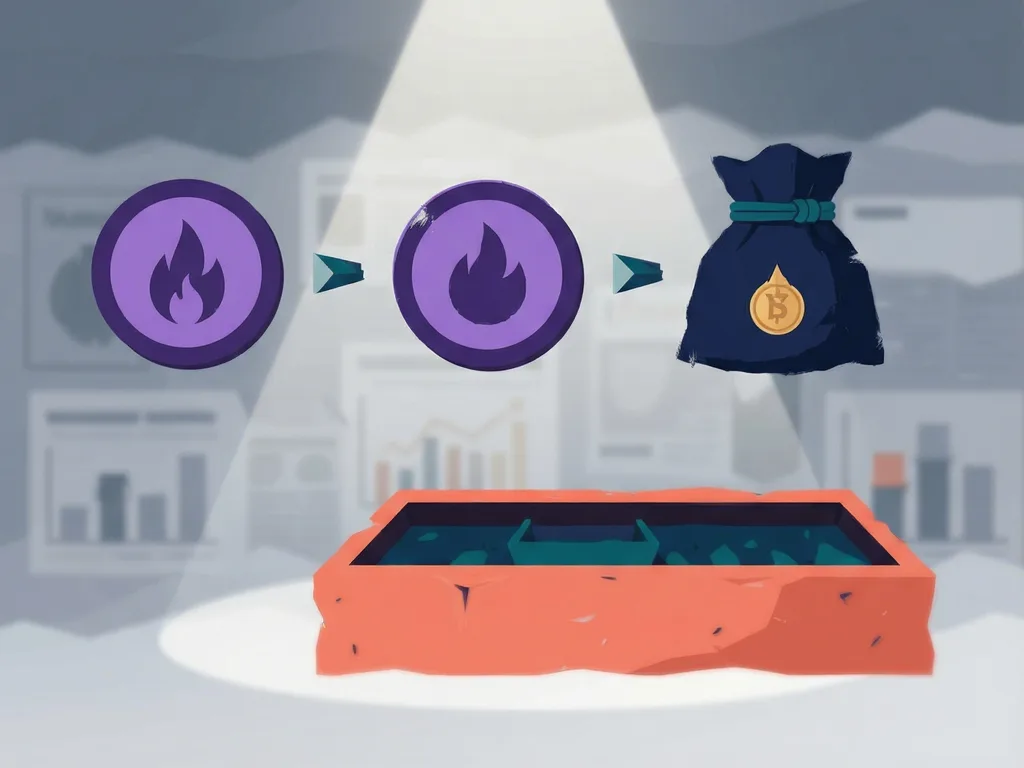
Whale Factor reported another $1.82 million worth of ASTER burned. The reported mechanism allocates 99% of daily platform fees to token buybacks, while an equivalent amount is burned from the reserve. Aster’s website tokenomics description says 99% of platform fees go into ASTER buybacks, while 99% of reserves are burned at the same time.
On November 20, ASTER was trading at $0.50. That was about 5% lower over the last 24 hours and more than 20% lower over the last week. The trading range placed the token near the $0.49-$0.50 zone, which the analysis identifies as a key support area that buyers need to maintain.
The source also pointed to related developments: the going live of 3 USDC perpetual markets and Lista DAO rolling out lending.
Why Does the Burn Matter?
A buyback-and-burn structure can influence supply over time. Instead of relying entirely on occasional discretionary burns, the reported process creates a recurring link between platform revenue and token supply by generating regular buyback activity. Higher platform fees can increase buyback activity, while matching reserve burns can gradually reduce token supply.
This does not guarantee immediate price appreciation. ASTER still needs sufficient market demand to absorb selling pressure. Its longer-term effect also depends on trading activity, demand, circulating supply, and broader market conditions.
What Do the Derivatives Data Show?
Derivatives data can give a view of how traders are positioned. The open interest for ASTER futures was around $314.35 million, marking a decline of 4.11% from its position 24 hours earlier. Open interest is the total value or number of open futures positions; a decline can indicate that traders are closing or reducing exposure.
Liquidations in the 24-hour period were around $817,510, with long positions contributing the majority. That suggests many traders who expected higher prices were forced to close positions as the market moved lower.
What Is the Double Bottom Setup?
Crypto With Gopal sees the potential double bottom formation on the 4-hour chart around the $0.49-$0.50 support level. A double bottom is a technical pattern where a price falls to a level, rebounds, falls again, and then holds a similar low.
The cited analysis places the neckline resistance at $0.70. A breakout above that level would be confirmation of the pattern. If the pattern confirms, the analysis discusses $0.90-$1.00 as a possible upside scenario range.
The pattern has not been confirmed yet. A breakdown below the support area would ruin the bullish setup and could put more pressure on ASTER from the sellers’ side. Crypto With Gopal sees recovery as possible if ASTER maintains the current support level and successfully forms the double bottom pattern.
What Are the Key Steps?
The analysis highlights two steps. The first is the buying side defending the $0.49-$0.50 zone. The second is overcoming the $0.70 neckline. If those conditions hold, the $0.90 to $1.00 range is the next scenario range discussed in the analysis.
The next immediate move will depend on how buyers manage to defend the $0.49-$0.50 support region. A successful defense may keep $0.70 as the next confirmation level in focus, whereas a breakdown would weaken the bullish technical setup.
The buyback scheme and matching reserve burns by the platform through its fees are also significant trends worth watching. The reported $1.82 million burn adds supply-reduction context, but the burn process and the chart pattern are separate developments.
This is market analysis and reported technical scenarios, not guarantees. Crypto markets are volatile.