
Morpho Presents a Security Strategy to Counter the Rising Risks in DeFi.
Morpho presents layered DeFi security across protocol, vault, infrastructure and app layers, using immutable contracts, controls and verification.
Club desk Updated 2026-11-23 0 replies
What did Morpho describe?
As attack pressure on DeFi increases, Morpho has laid out a security framework that separates risk across protocol, vault, infrastructure and application layers. In practice, that includes the core market contracts, Morpho Vaults, infrastructure and applications. Instead of treating all parts of the system as one attack surface, the project says controls should match the source of risk in the stack. Its method combines two ideas: remove whole categories of risk through protocol design, and protect the risk that remains through operational security. The framework is built on the design of Morpho Protocol.
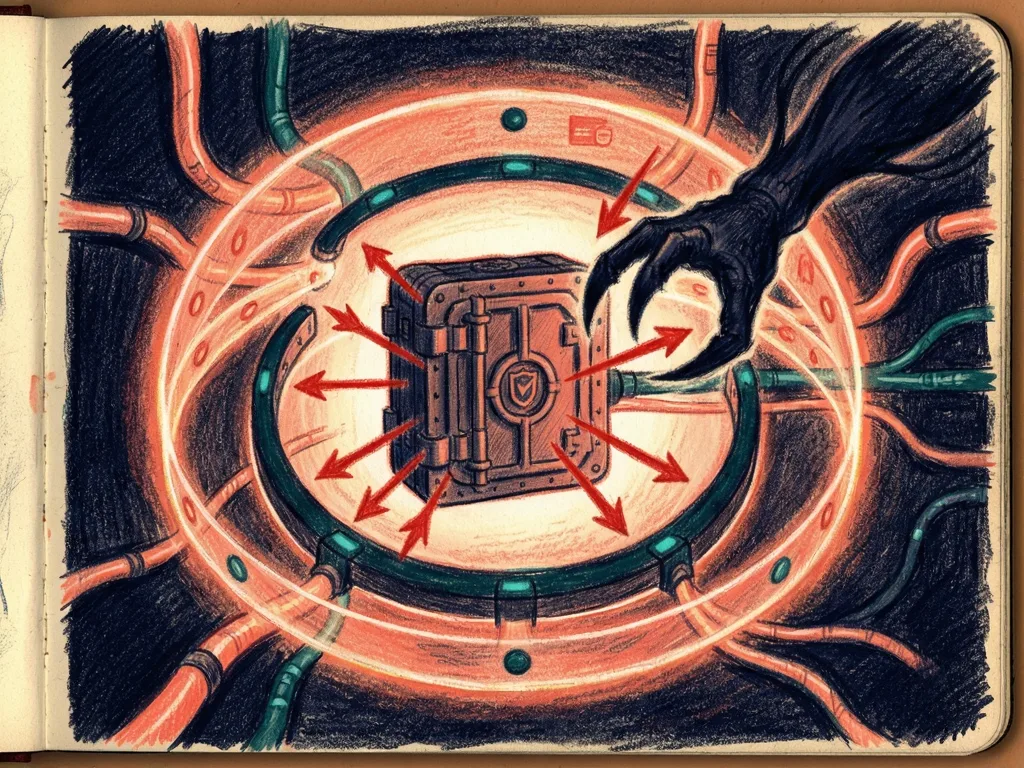
For a newcomer, this means Morpho is not pointing to a single safety feature. It is explaining which parts are designed to be hard to change, which parts need trusted roles, which parts depend on operations, and which parts depend on what users see before they sign.
Why does layering matter for users?
DeFi systems can fail in different places. A contract may contain a flaw, a data feed may send a bad price, a privileged role may be misused, or a frontend may present a transaction in a misleading way. Layering lets each risk be addressed where it appears.
The framework also treats defense as an ongoing operational process rather than a one-time audit milestone. That is a practical stance: products change, new attack methods appear, and monitoring can catch problems that static reviews may miss.
How does the market layer reduce certain risks?
Morpho Blue and Morpho Midnight use core contracts that are immutable, noncustodial and deliberately simple. They are also formally verified. In this layer, administrators cannot change deployed contracts or transfer user assets. Governance can only enable certain parameters and set fees inside hardcoded caps.
This design removes upgrade-key attacks from the core market layer. A smaller codebase also reduces smart contract exposure. Formal verification is used alongside testing, audits and continuing reviews.
In plain language, immutable means the main contract rules cannot be changed after deployment. Noncustodial means users do not hand custody of their assets to a central operator. Formal verification uses mathematical checks to see whether code follows intended properties.
Even so, Morpho says assets and oracles remain external risks that market creators and users must evaluate. An oracle supplies outside data, such as prices, to smart contracts. If that data is wrong or manipulated, a contract can still behave badly.
What protects Morpho Vaults?
Morpho Vaults need operational permissions because curators allocate liquidity and define risk. The framework separates duties among Owners, Curators, Allocators and Sentinels. Timelocks postpone sensitive changes, giving users a window that may allow them to exit.
The goal is not to pretend privileged access can disappear. It is to contain privileged-access risk. Sentinels can revoke pending changes, reduce exposure limits and deallocate liquidity. This fits the protocol’s broader emphasis on security-first lending design.
For users, a timelock can create a safety pause before a change becomes effective. A Sentinel can act like a protective operator that can stop or shrink a risky setup. Role separation means no single person or group controls every step.
What happens beyond the smart contract?
Morpho says wallets and integrators can decode transaction details on their own, allowing users to check assets, permissions and actions before signing. This is useful because the interface that prepares a transaction may not be the only source of truth.
Its production systems use short-lived privileged credentials, monitored access, isolated deployment checks, human review, continuous monitoring and incident-response rotations. The application layer is built around verifiability, even if the frontend preparing a transaction is compromised.
These controls complement independent reviews and an ongoing public bug bounty. The project also works to harden developer infrastructure and transaction verification. Short-lived credentials reduce the damage from stolen access. Deployment checks and human review can catch errors before release. Continuous monitoring and incident-response rotations prepare teams to react.
What risks does Morpho say remain?
Morpho warns that this framework does not make the system perfectly safe. Risks tied to smart contracts, oracles, assets and vault configuration still exist. This warning matters because DeFi security is increasingly shaped by interconnected dependencies, not just isolated contract bugs.
For readers, the takeaway is that design choices can remove some attack paths, but users may still need to assess the assets they use, the data sources a market relies on, and the rules of a specific vault.
How does Morpho use external threat information?
Morpho also uses automated agents to investigate threats and incidents across the wider ecosystem. It can learn from those incidents even when its own systems are unaffected. This reinforces the idea that security is continuous: outside incidents can reveal weaknesses before they reach a given protocol.
The result is a framework that separates risk by layer, removes some risks through protocol design, and manages remaining risks through operational controls, verification and monitoring.
Smart contractsMorphoDeFi securityLayered securityOperational controls