
South Korea has proposed requiring banks to hold majority control over won stablecoins.
South Korea proposes bank-led won stablecoin issuance with regulator licensing, 5 billion won capital, 100% reserves, redemption, and no interest.
Club desk Updated 2026-11-29 0 replies
South Korea’s FSC Proposes a Bank-Led Framework for Won Stablecoins
What Is the Proposal?
South Korea’s Financial Services Commission has proposed a framework for won-denominated stablecoins that would keep banks at the center of issuance. The FSC has described stablecoins as “digital payment tokens” and has outlined plans for legislation under the Digital Asset Act.
Under the proposal, won stablecoins would initially be issued only by consortiums in which banks hold more than 50% ownership. That does not mean banks would necessarily control every part of a project. The proposal would still allow fintech or technology companies to become the largest individual shareholder, as long as the consortium as a whole remains majority-owned by banks.
The approach builds on earlier debate over stablecoin regulation and follows discussion around bank-led won stablecoins. Instead of allowing unrestricted private issuance, it combines bank-majority ownership with regulatory authorization.
Why Does This Matter for Stablecoin Users?
Stablecoins are digital tokens that aim to hold a stable value, usually by being pegged to a currency such as the won, USD, or another reference asset. The main question for users is whether the issuer can keep that peg strong enough to be trusted for payments, trading, or other financial activity.
The FSC proposal is important because it sets a higher bar for who may issue won stablecoins and how those issuers must manage reserves. A bank-centered structure is intended to connect stablecoin issuance with institutions that are already subject to strict financial rules. For users, this could mean that issuance is tied to stronger oversight, clearer reserve requirements, and more formal redemption rights.
At the same time, the proposal is not limited to won-based issuance. It also addresses foreign stablecoins that want access to South Korea’s market. That matters because many stablecoins in circulation are issued outside a user’s home country. If a foreign stablecoin cannot meet local approval or reporting conditions, it may be blocked from local exchange activity.
What Would Issuers Need Before Launching a Won Stablecoin?
Issuers would need authorization from the FSC. They would also need at least 5 billion won in equity capital. That capital requirement is meant to give issuers enough financial resources to operate and absorb basic business risks.
The proposal would also require issuers to have staffing, facilities, and qualified major shareholders comparable to those expected of financial institutions. Domestic issuers would have to submit plans covering issuance volumes and reserve management. In plain terms, an issuer would need to show not only how much money it has, but also how it plans to issue tokens and keep the system safe.
How Would Reserve Backing Work?
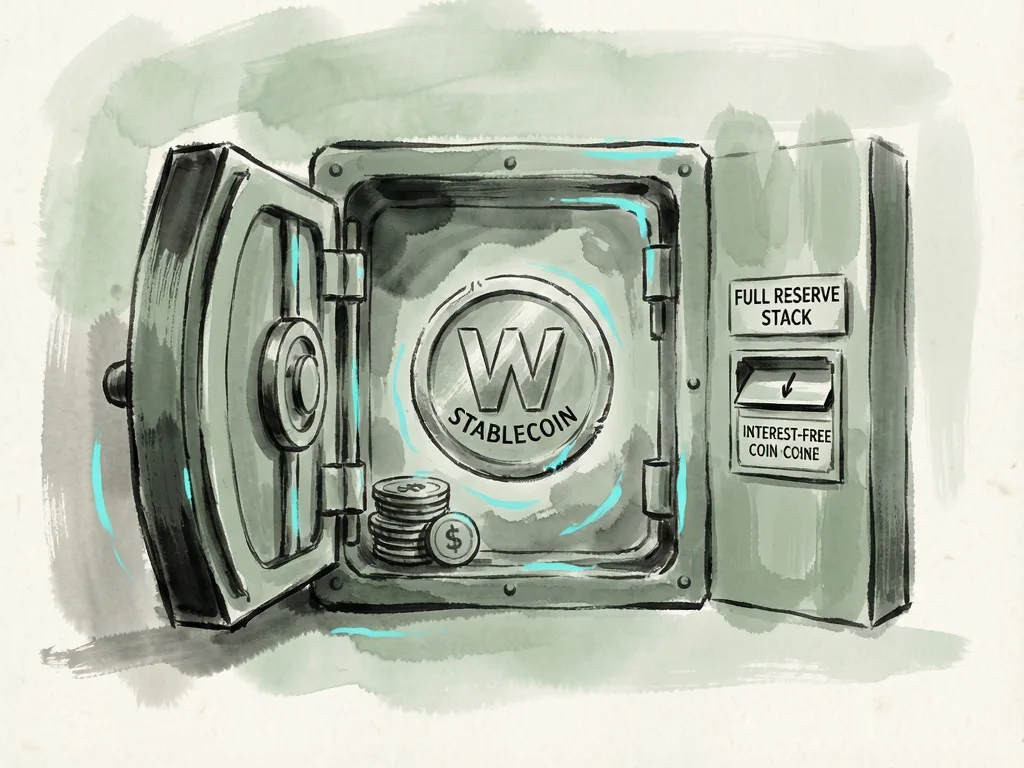
A central part of the proposal is reserve backing. Issuers would be required to hold reserve assets worth at least 100% of outstanding stablecoins. These reserves would need to be held with a custodian such as a bank, or placed in trust.
The reserve assets would need to remain in highly liquid assets denominated in the pegged currency. Deposits and government bonds are mentioned as examples. This is intended to make it easier for the issuer to return value to holders if they want to redeem their stablecoins.
The proposal would also prohibit interest payments to stablecoin holders. This is a notable rule because it separates stablecoin issuance from deposit-taking in the traditional sense. A stablecoin would be designed as a payment token with a pegged value, not as an interest-bearing savings product.
What Would Redemption Rules Require?
Redemption at equivalent monetary value would be mandatory. This means holders should be able to exchange stablecoins for the underlying value represented by the token. The framework also describes immediate redemption at equivalent value.
The proposal would give reserve assets protection if an issuer failed or suffered a hack. That is significant because one of the main risks in stablecoin systems is what happens when the issuer has a crisis. If reserves are properly protected, users may have a clearer claim on the assets backing the token.
How Would Foreign Stablecoins Be Treated?
Foreign issuers could enter South Korea under the proposed framework, but only through a defined route. They would need to be licensed in jurisdictions meeting international standards, establish a local branch, and register with the FSC.
If an overseas stablecoin fails approval or reporting requirements, it could be barred from domestic exchange listing, trading, and brokerage. That means the framework extends beyond won-based issuance to foreign stablecoins seeking access to Korean markets.
This part of the proposal complements work on stablecoin payments and foreign-exchange oversight. For users, the practical message is that not all foreign stablecoins would be treated equally. Some could operate under a local registration path, while others could be excluded if they do not meet the required conditions.
What Changes If a Stablecoin Reaches 1 Trillion Won?
The proposal introduces a higher level of supervision for larger stablecoins. Stablecoins with at least 1 trillion won outstanding could be designated “significant digital payment tokens.”
If a stablecoin reaches that size, it could face additional capital requirements. The Bank of Korea would gain authority to request data and participate in joint inspections. In addition, a committee involving the FSC, finance ministry, and central bank would review matters affecting monetary and foreign-exchange markets.
The 1 trillion won threshold matters because scale can change the nature of risk. A very large stablecoin is not just a product for a small group of users. It may affect payments, liquidity, and confidence in the broader financial system. The proposal responds by adding tougher capital rules and joint oversight for stablecoins that reach that size.
What Does the Framework Emphasize Overall?
The proposal emphasizes institutional control, reserve transparency, and interagency supervision as South Korea develops its won stablecoin regime.
Issuers would have to disclose reserve status continuously and undergo monthly audits. Continuous disclosure means users and regulators should not have to rely only on occasional updates. Monthly audits add another layer of checking, giving the system a more regular review cycle.
For readers, the main point is simple: the FSC is proposing a stablecoin regime in which banks have majority ownership, issuance requires formal authorization, reserves must fully back outstanding tokens, redemption rights are mandatory, and larger stablecoins face extra scrutiny. Foreign stablecoins may enter the market, but only if they meet international licensing standards and local registration rules.
Stablecoin RegulationSouth KoreaDigital AssetsWon StablecoinsBank-Led