
Federal Reserve Governor Waller warns about zombie chains as tokenization expands
Federal Reserve Governor Waller warns tokenized assets may become stranded on zombie chains, urging rules and noting traditional rails still matter.
Club desk Updated 2026-11-29 0 replies
Waller Warns Tokenized Assets Could Be Stranded on Zombie Chains
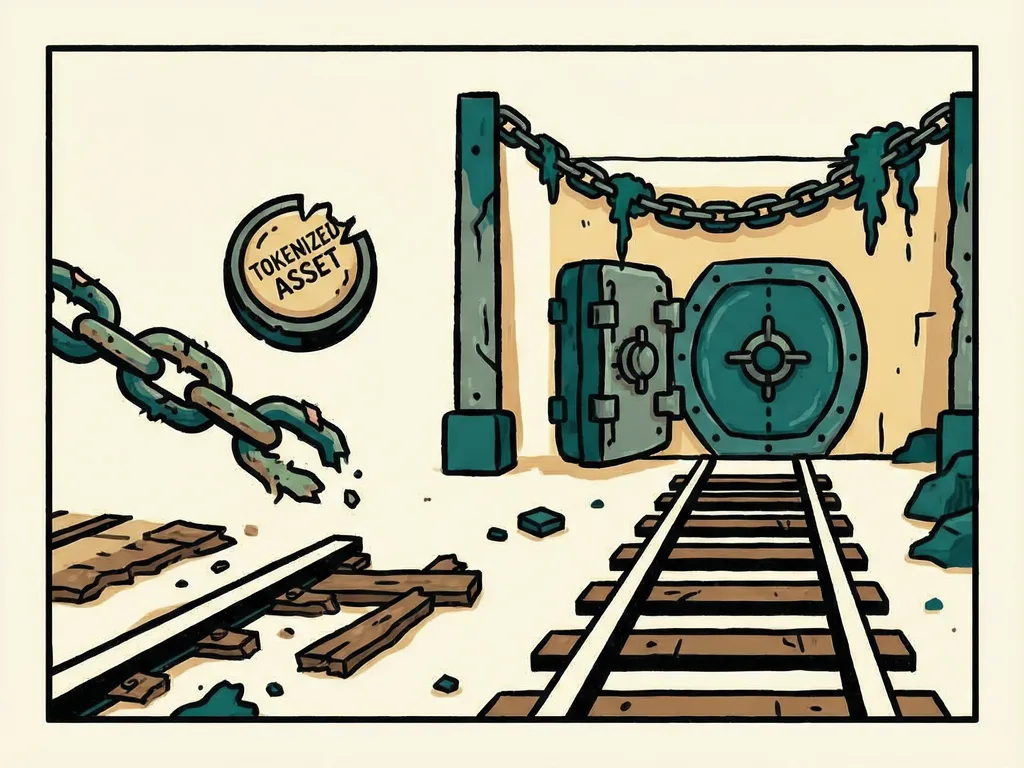
U.S. Federal Reserve Governor Christopher Waller said on November 17 that the U.S. central bank will support responsible innovation across payments, according to Reuters. He also warned that tokenized assets could become stranded if the blockchains behind them fail.
The warning came at The Clearing House Annual Conference. Waller described a rapid shift toward tokenization, with assets ranging from equities to commodities moving onto blockchains and stablecoins increasingly handling payments behind the scenes.
What Is Waller Warning About?
Waller’s main concern is not that tokenization will stop. It is that financial assets can move onto new technical systems faster than the legal and governance rules around those systems.
Tokenized assets are claims, records, or representations of value that are placed on a blockchain. For example, a token could represent a financial instrument, a settlement obligation, or a deposit-like balance. The value of the token depends on the network that records it and the rules that allow it to be exchanged, transferred, or redeemed.
Waller said regulators and market participants need clearer rules governing tokenized claims, settlement records, custody, insolvency and the resolution of failed systems. Without those safeguards, technical failures and fraud could create broader problems for financial markets.
He also questioned who should be held accountable if fraudsters take advantage of the automatic execution of smart contracts. Smart contracts are programs that can carry out actions automatically when set conditions are met. If the code runs without enough oversight, users may need clear rules about who is responsible when something goes wrong.
What Are Zombie Chains?
In his written remarks, Waller explained that the term “zombie chains” generally refers to blockchains with very little developer activity and daily use.
A zombie chain may still exist technically, but it is no longer a healthy place to hold or move important financial value. If a network has few developers, little usage, weak security maintenance, or poor support, assets recorded on it may become hard to manage, trade, redeem, or unwind.
This matters for tokenized finance because users may not only be exposed to the asset itself. They may also be exposed to the health of the network that records the asset. If the underlying chain fails, a tokenized claim could become stranded.
Why Traditional Payment Rails Still Matter
Waller said traditional rails and the forms of money exchanged on them will continue to play an important role in underpinning trust in the overall payment system.
Traditional payment rails are the existing networks used by banks, card networks and settlement systems to move money. These systems already handle large volumes of payments and have established legal and operational relationships.
Waller argued that multiple forms of digital money will coexist with established networks rather than replace them, according to Pymnts. He said digital money will complement traditional financial networks, not replace them.
He also warned that faster transactions do not eliminate risks around redemption, liquidity and settlement. Redemption refers to the ability to convert a claim back into another form of money or access the underlying value. Liquidity refers to whether funds can be obtained when needed. Settlement refers to the final transfer of value between parties.
Instant settlement can reduce waiting time, but Waller cautioned that it could strain liquidity by removing the benefits of netting. Netting is the process of grouping many transactions and settling the differences. That can reduce the amount of money institutions need to move at one time. Waller said working-capital efficiency may therefore be more important than speed alone.
What Is Central Bank Money’s Role?
Waller said that “central bank money need not be used in every transaction or on every platform, but its presence at the foundation of the system is essential.”
In simple terms, central bank money is money issued by the central bank. It sits at the base of the payment system and helps support trust in other forms of money used by households and businesses.
Waller added that the central bank can also help bridge gaps when private markets cannot resolve challenges that fall within the central bank's responsibilities.
He said the Federal Reserve will continue to support responsible innovation by regularly engaging with and listening to industry, providing core payment and settlement infrastructure on which all market participants can build, and monitoring risks to financial stability, according to Reuters.
At the same time, Waller said the private sector remains best positioned to develop products that benefit businesses and consumers through competition. In his view, the Federal Reserve’s role is to provide underlying infrastructure and oversight that allow innovation to develop responsibly.
How Are Banks Moving Into Tokenization?
Waller pointed to the growing use of blockchain technology across financial markets, with assets ranging from equities to commodities moving on-chain and stablecoins settling obligations behind the scenes in card networks, according to The Street.
Stablecoins are digital tokens that are typically designed to hold a stable value, such as being backed by a currency. In Waller’s description, they are increasingly involved in payment flows behind the scenes, including within card networks.
Banks are also experimenting with tokenized deposits that mirror checking-account balances. A tokenized deposit is a digital form of a bank deposit claim that can move on a blockchain-based system.
Separately, 39 state banking associations formed the BankChain Alliance. The group aims to launch a bank-operated network for tokenized deposits, stablecoins and payments in 2027.
What Is Project Faro?
The broader push into digital money also includes a separate effort by major global banks to develop their own stablecoin. Goldman Sachs, Citigroup, Banco Santander and Deutsche Bank are among the institutions that have committed approximately $270 million to the venture, known internally as Project Faro, according to Bloomberg.
The funding is expected to cover the company's first five years of operations, with a U.S. dollar-backed stablecoin targeted for launch in the first half of 2027.
Why This Matters for Users
For everyday users, the main takeaway is that digital finance is not only about speed. It is also about whether claims can be redeemed, whether records can be trusted, and whether systems can survive failure.
If a stablecoin or tokenized deposit is used in payments, users may need clarity on several points:
- Who controls the underlying value?
- How is the token redeemed?
- What happens if the issuing bank or network fails?
- Who is responsible if fraud occurs?
- How are settlement records maintained?
- What happens if the chain becomes inactive or “zombie-like”?
Waller’s comments suggest that tokenization may expand, but it should not be treated as automatically safer simply because it is faster or digital. The legal framework matters as much as the technology.
What Comes Next?
Waller’s remarks point to a coexistence model: traditional payment networks, central bank money, bank deposits, tokenized deposits, stablecoins and blockchain-based systems may all remain in use.
The challenge is to build clearer governance and legal safeguards around these new forms. If those safeguards are missing, tokenized assets could become stranded on failed chains. If they are present, digital money may complement existing systems while reducing some of the risks that come with new infrastructure.
TokenizationDigital AssetsFederal ReserveZombie ChainsPayment Rails